
Short answer
AI analysis improves ecommerce reporting by explaining why metrics changed, not just showing that they did. It scans blended data across store, ads, shipping and inventory, ranks the changes that matter, suggests likely causes and answers questions in plain language. It works best on clean, connected data, with the underlying numbers one click away for verification.
Key takeaways
- Dashboards answer 'what'. AI analysis helps with 'why' and 'what next'.
- AI needs blended data. It can't explain a revenue drop caused by a courier problem if it can't see courier data.
- Always keep the numbers behind an AI explanation visible and exportable.
- The biggest win is time: lean teams get answers without waiting for an analyst.
Most D2C teams have more dashboards than time to read them. AI analysis changes the job from "look at every chart" to "read the three things that changed and decide".
What AI analysis does
| Job | Without AI | With AI |
|---|---|---|
| Spot changes | Someone scans charts | Changes are detected and ranked by impact |
| Explain | Analyst digs through tools | Likely causes suggested from connected data |
| Answer questions | Build a new report | Ask in plain language |
| Summarise | Weekly deck prepared by hand | Morning summary generated automatically |
Example questions it should answer
- Why did revenue drop yesterday?
- Which ad is wasting money this week?
- Which products will run out in the next 10 days?
- Why did RTO rise in Uttar Pradesh?
- How did last weekend's sale compare with the previous one?
What makes AI analysis trustworthy
- Connected data. The AI can only explain causes it can see.
- Show the numbers. Every explanation should link to the underlying data.
- Consistent definitions. Revenue, MER and RTO must be defined the same way every time.
- Admit uncertainty. "Likely cause" and "needs checking" are honest; confident guesses aren't.
Where it saves the most time
For founder-led D2C teams without analysts, AI analysis replaces the Monday report, the Slack thread asking "why are sales down?" and the half-day spent finding out. The team spends that time acting instead.
Ask from where you already work
Many founders now use AI assistants like Claude every day. With MarQet BI's MCP connector, you can ask Claude about your live Shopify, ads and shipping data directly.
How MarQet BI does it
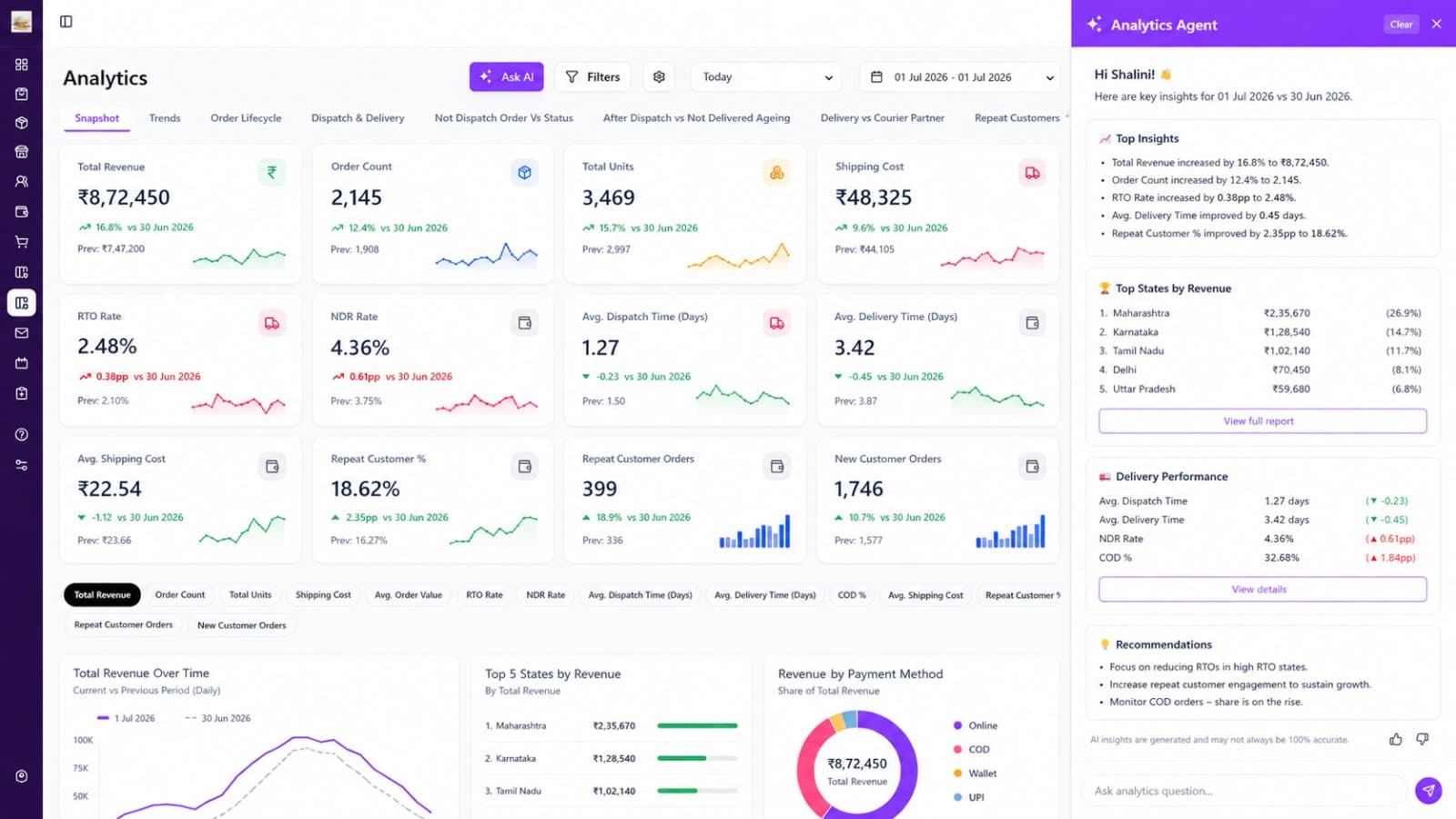
MarQet BI builds a morning list of what changed, lets you ask why a number moved in plain language, and keeps the numbers one click away, with exports for finance.
Frequently asked questions
What is AI analysis in ecommerce reporting?
The use of AI to detect, rank and explain changes in ecommerce metrics, and to answer questions in plain language, on top of connected store, ads, shipping and inventory data.
Can AI replace a data analyst for a D2C brand?
For routine monitoring and questions, AI analysis can cover much of the work for lean teams. Complex modelling and strategy still benefit from an analyst.
How do I know AI explanations are correct?
Use tools that show the underlying numbers behind each explanation, define metrics consistently, and flag uncertainty instead of guessing.

Written by
Ayush Singhal, Founder, MarQetAyush founded MarQet to give D2C founders one system for customer conversations, daily performance and quick-commerce shelf availability.