
Short answer
Inventory planning for D2C brands means keeping enough stock of each SKU, in each location and channel, to cover demand through your replenishment lead time plus a safety buffer, without tying up cash in slow movers. Track days of cover per SKU and location, set reorder points from lead time and sales velocity, plan campaigns ahead, and review weekly.
Key takeaways
- Plan in days of cover, not units. 1,000 units can be 3 days or 3 months.
- Reorder point = daily sales × lead time + safety stock.
- Hero SKUs deserve tighter buffers; long-tail SKUs deserve tighter cash control.
- Multi-channel brands must plan per location: website warehouse, marketplace FCs and quick-commerce warehouses.
Stock-outs on a hero SKU during a campaign are one of the most expensive mistakes a D2C brand can make: you've paid for demand you can't serve. Overstock is the opposite mistake: cash locked in boxes. Inventory planning sits between the two.
Think in days of cover
Days of cover
Days of cover = Units in stock ÷ Average daily units sold
| SKU | Stock | Avg daily sales | Days of cover | Lead time | Status |
|---|---|---|---|---|---|
| Hero serum 30ml | 4,200 | 300 | 14 | 21 days | Reorder now |
| Face wash 100ml | 6,000 | 150 | 40 | 21 days | Healthy |
| Night cream | 3,000 | 25 | 120 | 30 days | Overstocked |
Reorder points and safety stock
Reorder point
Safety stock = Average daily sales × Safety days
Reorder point = Average daily sales × Lead time + Safety stock
Safety days depend on how variable demand and supply are. Hero SKUs with campaign spikes need more; steady long-tail SKUs need less.
Multi-channel inventory
| Location | Who controls it | Planning note |
|---|---|---|
| Your warehouse / 3PL | You | Feeds website orders and often marketplaces |
| Marketplace fulfilment centres | Marketplace, from your shipments | Plan inbound by FC |
| Quick-commerce warehouses and dark stores | Platform, from your POs | Track PO fill rate and store-level availability |
Total stock can look healthy while one channel is empty. See the dark store replenishment playbook for quick commerce.
Planning production
For brands that manufacture, the question each morning is: what should we finish today? Prioritise SKUs where days of cover is below lead time, weighted by margin and demand.
Campaigns and seasonality
Before a sale, estimate uplift per SKU from past campaigns, then check days of cover at the expected new run rate. A SKU with 30 days of cover at normal sales may have only 8 days during a 4× sale.
A weekly inventory review
- SKUs below reorder point, by location
- SKUs with days of cover above 90 (cash tied up)
- Upcoming campaigns and expected uplift
- Inbound shipments and their dates
- Quick-commerce availability and PO fill rate
How MarQet helps
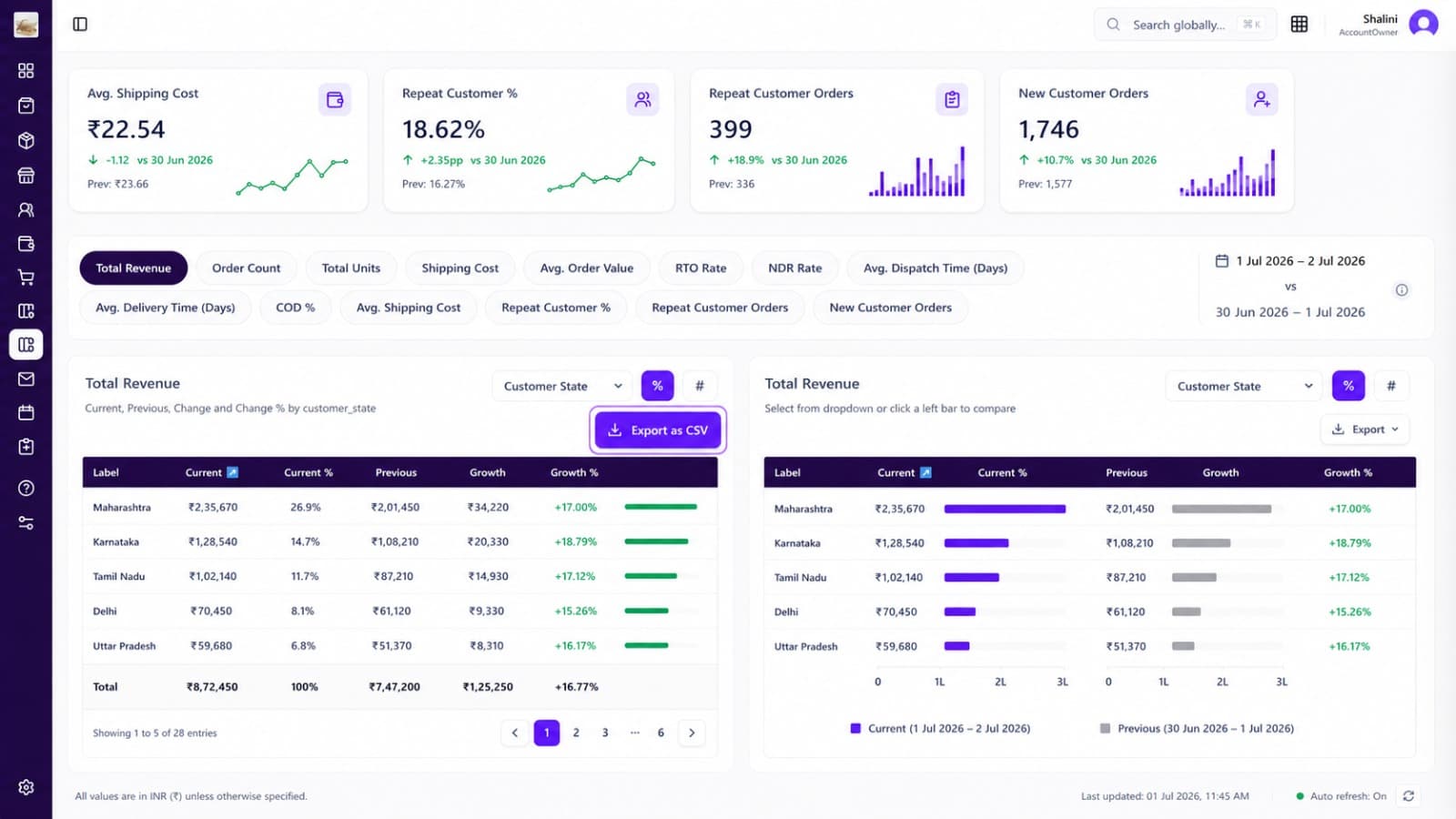
MarQet BI shows days of stock left on every product you make, what to finish with today's capacity, and what to send to each warehouse, alongside sales, ads and shipping, so inventory decisions and marketing decisions use the same numbers.
Frequently asked questions
What is days of cover?
Days of cover is how many days your current stock will last at the average daily sales rate. It is calculated as units in stock divided by average daily units sold.
How do I calculate a reorder point?
Reorder point equals average daily sales multiplied by lead time in days, plus safety stock. Safety stock is average daily sales multiplied by the number of buffer days you want.
How should D2C brands plan inventory across Amazon, website and Blinkit?
Plan per location and channel, not just total stock. Track days of cover in each warehouse or fulfilment centre, PO fill rate for platforms, and store-level availability for quick commerce.

Written by
Ayush Singhal, Founder, MarQetAyush founded MarQet to give D2C founders one system for customer conversations, daily performance and quick-commerce shelf availability.